Catering
Do you organize buffets, events, or business lunches? At Horeca Online Store, you’ll find catering equipment and supplies to ensure a smooth mise-en-place, safe food storage, and efficient service. Think of warming solutions like chafing dishes and bain-maries, transport solutions like thermal boxes and serving carts, and practical stainless steel work and washing solutions. You can easily choose the right model based on size, capacity, and material. Many products are available directly from stock, so you can quickly get started on your next assignment.






Trending products
Keeping Food Warm & Buffet
Chafing dishes: a buffet classic for serving hot food
A chafing dish is the gold standard for buffets and event setups: you can present dishes hot, and guests can serve themselves or you can serve them from the display. The main advantage is the combination of presentation and heat retention. You can keep dishes at serving temperature without having to constantly go back to the kitchen.
When choosing a chafing dish, it’s helpful to consider the following:
- Size & capacity: suited to your expected volume and the type of dish (e.g., pasta vs. vegetables vs. curry).
- Heat source: traditional, using fire paste or fire gel (portable, no electricity required) or electric (more consistent heat, useful for permanent installations).
- Container compatibility: Chafing dishes are often used with GN containers; this is ideal because it allows you to quickly swap out, refill, and prepare in advance.
- Lid type: A roll-top or hinged lid makes it easier for guests and minimizes heat loss.
Why this is so important in catering: With buffets, you want every dish to still be at the right temperature and have the right texture, even after 30–60 minutes. With a stable warming system, you avoid having to “reheat” dishes (which compromises quality) or refill them too often (which requires extra steps).
Bain-marie: controlled heat retention without burning
A bain-marie (water bath/warming pan) is ideal for ingredients that are sensitive to direct heat or high peak temperatures: sauces, soups, stews, chocolate, as well as delicate vegetable or meat ingredients. Because the heat is transferred via a water bath, the risk of burning or drying out is much lower.
Key selection criteria:
- Number of compartments / GN layout: the more components you need to keep warm at the same time, the more important a logical layout becomes.
- Temperature control: Being able to adjust the temperature precisely is helpful when you're processing different products one after another.
- When to use: In a commercial kitchen, a bain-marie can serve as a “warming station” for serving, while at events, you can use a compact model for serving sauces or soups.
Catering in Practice: If you work with a wide variety of sauces and toppings (e.g., street food, bowls, pasta stations), a bain-marie is often the most reliable solution: less waste, fewer adjustments, and smoother service.
Soup Kettles: Compact Serving Solutions for Soup, Sauce, and Hot Snacks
Soup pots are popular because they’re portable, compact, and quick to set up. You can use them for soup, but also for chili, curry, stews, or hot sauces. Their round shape and lid help retain heat well, and they make it easy to serve with a soup ladle.
What to look for:
- Capacity (liters): Adjust this based on your expected sales/dispensing rate per hour.
- Inner pan/removable insert: makes cleaning and replacement faster.
- Uses: Ideal for lunch catering, small events, booths, and self-service.
Tip for SEO/users: Mention on the page that soup kettles aren't just for soup—caterers also use them for sauces and stews.
Warming Cabinets & Warming Display Cases: Capacity and Throughput
If you’re preparing larger batches (e.g., in a production kitchen or for an event), you’ll want to keep food warm without compromising on quality. Warming cabinets are useful in these situations: they keep trays or containers at the right temperature and you only bring them to the serving area when needed. Warming display cases add a presentation element to this (e.g., at snack corners or counter service).
It is important to note that:
- Capacity (trays, racks, GN) and air circulation (even heat distribution).
- Mobility (wheels) when you need to set up or take down quickly.
- Access: Doors and handles must be practical in a busy service environment.
Catering value: You create a buffer between production and service. This reduces stress for your team: you can work “ahead.”
Transportation & Distribution
Thermal Boxes: Temperature Control During Transport
Insulated containers are one of the most important investments for catering. They are designed to keep food hot or cold during transport and setup, which helps reduce HACCP risks. A good insulated container prevents dishes from cooling down too quickly or chilled products from remaining in the danger zone for too long.
What to look for:
- Size & Compatibility: Do your GN containers/trays fit inside? Can you stack them in multiple layers?
- Insulation rating: the longer you're on the go, the more important this becomes.
- Closure and portability: A secure closure prevents heat loss and spills.
- Cleaning: The smooth interior and durable materials make cleaning easier.
Catering Tip: Insulated containers are also handy “on-site” as a temporary warming or cooling solution. Especially when kitchen facilities at the event venue are limited, an insulated container can serve as your extra storage station.
Service Carts: Faster Serving and Clearing Tables
A serving cart is all about workflow. It cuts down on trips back and forth, lets you carry a lot at once, and helps you work more neatly (less chance of things falling or clattering). For on-site catering, serving carts are useful for:
- setting out the dishes and silverware,
- serving plates,
- clearing the table and sorting,
- and even as a “mobile workbench” during setup.
Please note:
- Number of shelves and weight capacity: depends on the plates, pans, or containers.
- Wheels: smooth rolling and preferably with brakes, especially on speed bumps and slopes.
- Material: Stainless steel is hygienic and durable; ideal for heavy-duty use.
Why this matters: Catering is often time-sensitive. Every step you can standardize (loading the truck → traveling to the venue → serving → clearing tables) leads to greater efficiency and speed.
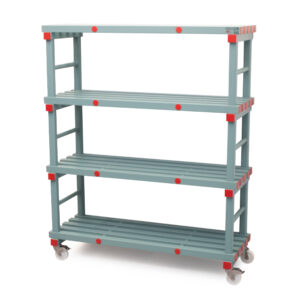
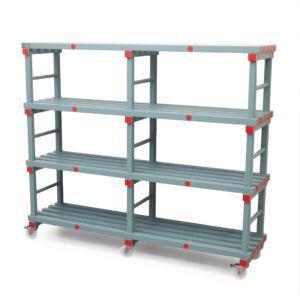
Shelf Carts: Organized Transport of Trays, Containers, and Mise-en-Place
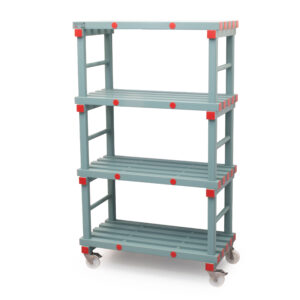
Serving carts are designed to provide organization. You work with multiple trays or GN containers, and you want everything to be arranged logically and safely. In a production kitchen, you can use them to set up your mise-en-place; on location, you can quickly set up serving stations with them.
Tips for Choosing:
- Distance between rails: to fit your containers/trays.
- Stability: important when fully loaded and when traveling over uneven terrain.
- Hygiene: easy to clean, no hard-to-reach corners.
Stainless Steel Workspace & Storage
Stainless Steel Work Tables: Extra Workspace Where You Need It
Stainless steel work tables form the foundation of many catering kitchens: they are sturdy, hygienic, and built to withstand heavy use. The advantage of a work table is that it allows you to organize your workflow efficiently: cutting, portioning, packaging, labeling—all in one place with plenty of space.
What to look for:
- Dimensions: Width and depth determine how many people can work at the same time.
- Lower shelf or additional shelf: ideal for keeping baking pans, pots, or packaging within easy reach.
- Installation: against a wall or freestanding; important for walkways.
Catering Value: When it comes to large-scale production, speed is key. A work table that’s just right in terms of height and space prevents a cluttered workspace, which helps reduce errors.
Stainless Steel Work Cabinets: Storage Right Next to the Workspace
Work cabinets (with sliding doors, hinged doors, or drawers) are ideal for keeping your most frequently used items within easy reach: gloves, plastic wrap, labels, tools, small appliances, and cleaning supplies. This is especially convenient in the catering industry, where you often have to switch quickly between tasks.
Please note:
- Door type: Sliding doors are convenient for narrow passageways; hinged doors provide wide access.
- Organization: shelves vs. drawers, depending on what you're storing.
- Hygiene and Maintenance: Stainless steel is easy to keep clean.
Stainless Steel Racks & Shelving: Well-Organized Inventory and Mise-en-Place
Stainless steel shelving units help you keep your inventory and equipment neatly organized. In the catering industry, you often have a lot of “small” items: containers, lids, serving items, disposables, and cleaning supplies. A shelving unit helps you keep track of everything and makes restocking faster.
Select:
- Load capacity and number of levels.
- Width/depth to fit your space.
- Ease of cleaning: particularly important when storing food-related items.
Stainless Steel Sinks and Basin Units: Hygiene and Speed in Dishwashing and Food Prep
In the catering industry, a good dishwashing setup is important because you often have to deal with peak times: after setup, after service, and after takedown. Dishwashing stations provide a dedicated space for rinsing, pre-rinsing, and cleaning.
Please note:
- Number of bins (1 or 2) and whether you have space for pre-rinsing.
- Drip tray: convenient for trays and racks.
- Faucet/fixtures: depending on your plumbing system.
Refrigeration & Freezing for Catering
Refrigerators and Freezers: Food Safety and Planning
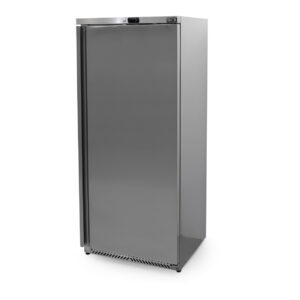
In the foodservice industry, refrigeration and freezing often make the difference between “feasible” and “chaos.” By using refrigeration wisely, you can prepare, portion, and set out food earlier, without compromising quality or safety.
Key points:
- Capacity: tailored to your production volume.
- Layout: racks, guides, space for GN containers.
- Location: in the production kitchen or as an additional unit near the serving area.
Catering in Practice: If you rely heavily on prepped ingredients (mise-en-place), proper refrigeration is essential for smoothing out peaks in workload. You can prepare items in advance, store them safely, and on the day of the event, you’ll have less to prepare.
Refrigerated/Freezer Workbenches: Prep and Storage in One
Workbenches with a refrigeration or freezing function are ideal when you need speed: you have refrigerated storage for ingredients right under your work surface. This works well for salad and bowl stations, sandwich production, or quick event setup.
Key points:
- The number of doors and drawers depends on your layout.
- Countertop space: sufficient for portioning and finishing.
- Temperature stability: important when doors are opened and closed frequently.
Hygiene & Dishwashing
Dishwashers and glasswashers: capacity and connections determine your choice
In the catering industry, dishwashing is all about throughput. You don’t want your team to come to a standstill because there aren’t any clean plates or glasses. That’s why you should choose the right dishwasher based on its hourly capacity and your technical setup (230V or 400V, water drainage, available space).
Glass-washing machines are especially useful when you have a lot of glassware or when you need to continuously wash glasses during events. They are often more compact and faster for a specific task.
Cleaning Products & Water Softeners: Equipment Protection and Consistent Results
Good cleaning products not only ensure that things are clean, but also that they’re cleaned quickly. In the hospitality and catering industries, you want products that are suitable for daily use and compatible with your equipment (dishwasher, oven, stainless steel).
Water softeners are important when dealing with hard water: less limescale means:
- better washing results,
- fewer malfunctions,
- longer equipment lifespan.
Kitchen equipment for (event) production
Contact grills, griddles, deep fryers, and ovens: speed, output, and consistency
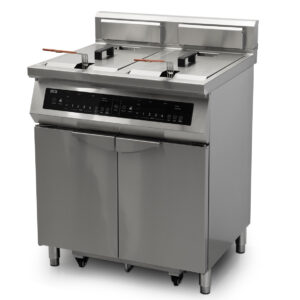
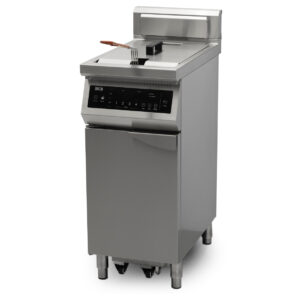
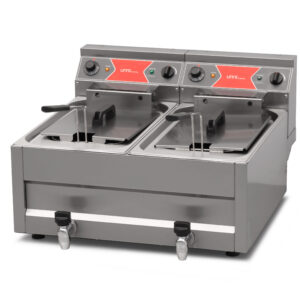
In a catering kitchen, you want equipment that allows for quick, repeatable production. Contact grills and baking sheets are great for high-volume cooking: you cook, flip, and serve. Deep fryers are ideal for quick-cooking items, but be sure to choose the right capacity so you don’t have to “wait for the oil to return to the right temperature.”
Ovens (e.g., convection or combination models) are particularly useful if you work in batches and want to maintain consistent quality. Think of cooking, reheating, and keeping food warm all in a single process.
Kitchen Accessories & Supplies
GN containers (Gastronorm): Standardization = Faster Work
GN containers are so popular in the catering industry because they standardize everything: storage, transport, keeping food warm, and serving. If you prepare your mise-en-place using GN containers, you can set up and switch out items more quickly on-site. It’s also easier to plan your workflow: you know exactly how many containers you need, and you can stack and label them.
Please note:
- GN size (e.g., 1/1, 1/2, 1/3) and depth (for volume).
- Material (stainless steel or plastic), depending on the application.
- Lid/seal: for transport and hygienic storage.
Vacuum (equipment): longer shelf life, tighter portioning
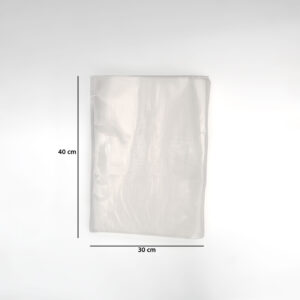
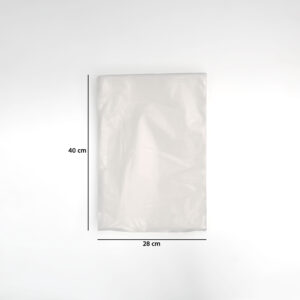
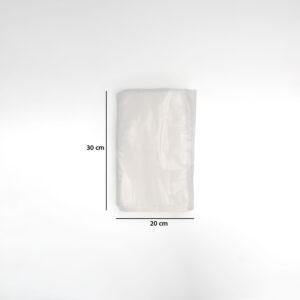
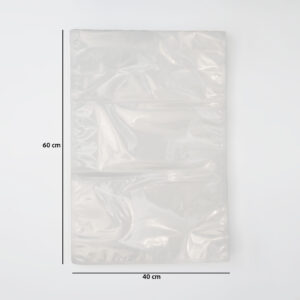
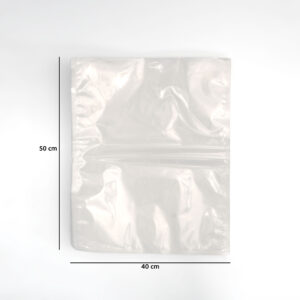
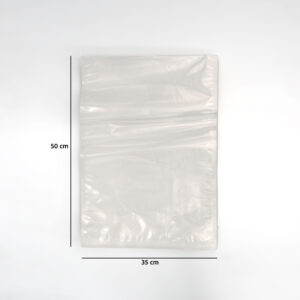
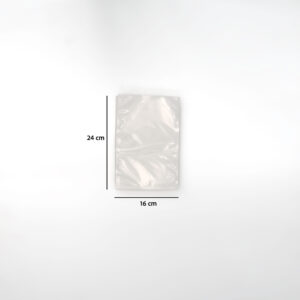
Vacuum packaging is beneficial for the catering industry because it allows you to better control quality and shelf life. You can portion ingredients, store them safely, and plan more easily. You can choose vacuum bags based on size, thickness, and type (e.g., embossed/textured for specific machines). This aligns well with a production kitchen that plans ahead and aims to manage peak demand.