Ovens
A professional oven is indispensable in any commercial kitchen. Whether you want to regenerate, bake, steam, proof, or smoke dishes, the right commercial oven allows you to work faster, more consistently, and often more energy-efficiently. At Horeca Online Store, you’ll find a wide selection of professional ovens for the foodservice industry, suitable for both compact kitchens and high-volume operations.
Key factors to consider when choosing an oven include the type of preparation, capacity, available space, power source (230V/400V/gas), ease of cleaning, and ease of operation. On this page, we’ll help you with a clear decision guide, and you’ll find practical tips for each type of oven. This makes it easy to choose the oven that fits your concept: restaurant, pizzeria, hotel, lunchroom, catering, or company cafeteria.


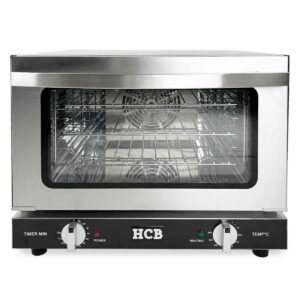
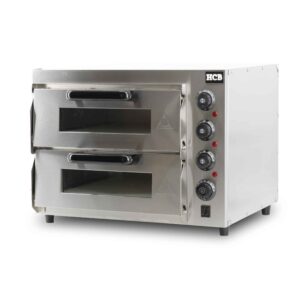
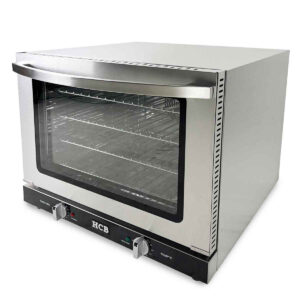
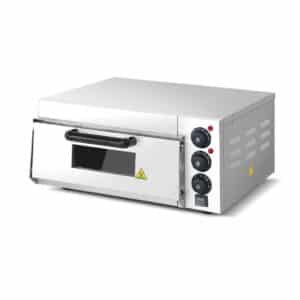
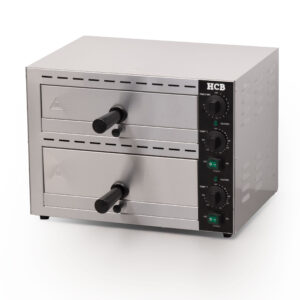
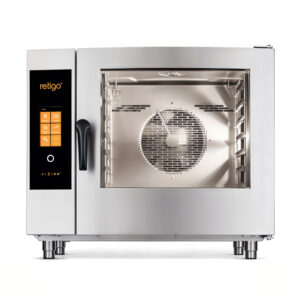
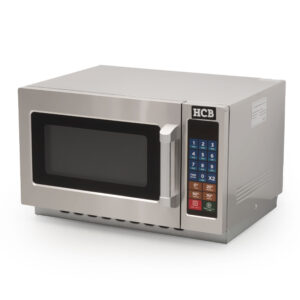
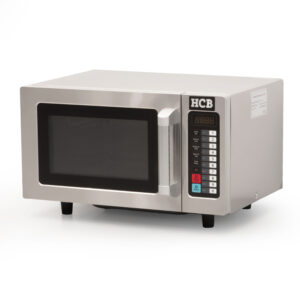
Trending products
Microwave Ovens (Professional)
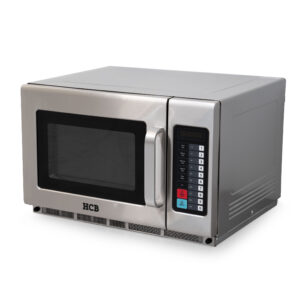
A professional commercial microwave oven is built for heavy-duty use. It heats food faster and more consistently than a consumer model, making it ideal during peak hours. Think of reheating portions, defrosting products, and warming up sauces or side dishes. Many commercial microwaves feature programmable controls, a sturdy stainless steel housing, and higher power settings for short cycles.
What should you look for in a commercial microwave?
- Power (watts): higher power = faster and more even heating
- Contents & size: tailored to your portion sizes and containers (e.g., GN)
- With or without a turntable: without a turntable is often more practical in the food service industry
- Programmability: Faster Operation and Fewer Operator Errors
- Cleaning: Stainless steel, smooth corners, and an easy-to-clean interior
Rice Cookers
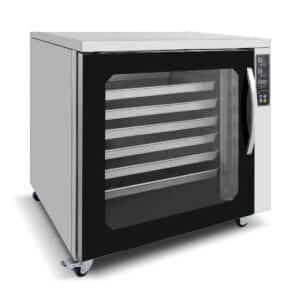
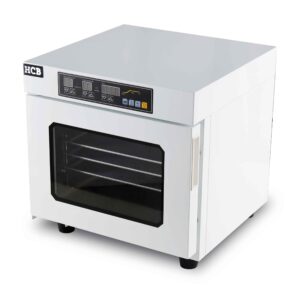
With a proofing cabinet for the foodservice industry, you can create a stable proofing environment for dough. By controlling temperature and humidity, you prevent the dough from drying out and ensure consistent proofing—essential for bread, pastries, and pizza dough. This makes your production process predictable and your end results consistent, even when kitchen conditions vary.
What should you look for in a proofing cabinet?
- Capacity: number of trays/racks tailored to your output
- Temperature and humidity control: suitable for various types of dough
- Insulation & Energy Consumption: Important When Left On for Long Periods
- Layout & Ease of Use: Sturdy runners, good door seal
- Hygiene: Easy-to-clean interior and rounded corners
Combi Steamers
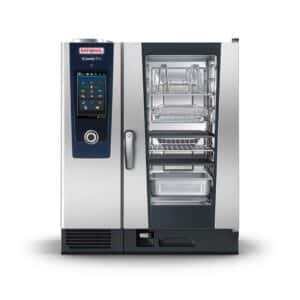
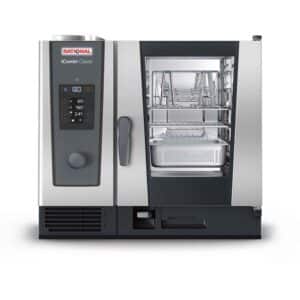
A combi-steamer combines hot air with steam and is one of the most versatile solutions in the professional kitchen. You can bake, roast, steam, and reheat while maintaining control over moisture, color, and texture. This helps prevent food from drying out and allows you to work more efficiently by preparing multiple dishes in a single appliance. Combi steamers are popular in restaurants, hotels, catering services, and institutions where consistent quality and speed are essential.
Key Benefits of a Combi Steamer
- Versatile: from steaming to roasting and reheating
- Less shrinkage: higher yields for meat, fish, and vegetables
- Consistent results: repeatable programs and monitoring
- Efficiency: Work Faster, Use Less Equipment
Buying Tips for Combi Steamers
- Control system: basic or fully programmable (HACCP/programs)
- Cleaning: (Semi-)automatic wash cycles save time
- Connections: water/drain and electricity (often 400V)
- Capacity: number of tiers, tailored to your mise-en-place and service
Hot air ovens
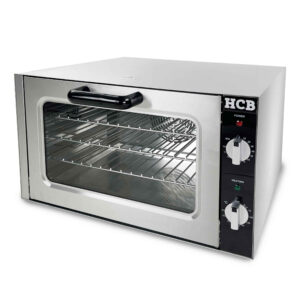
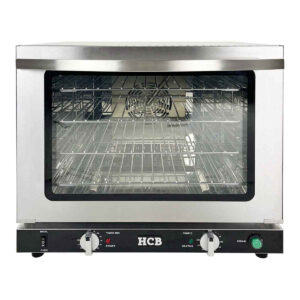
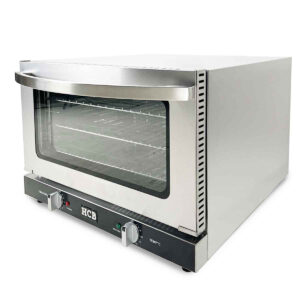
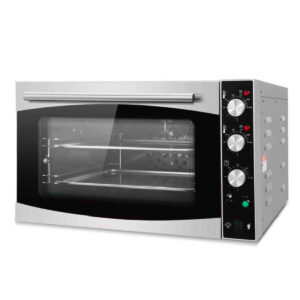
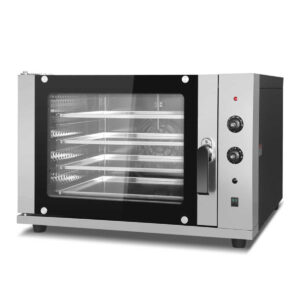
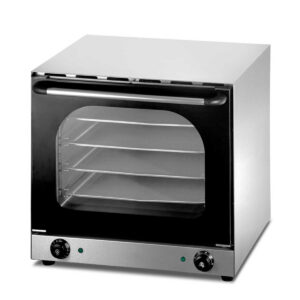
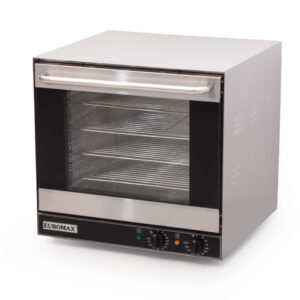
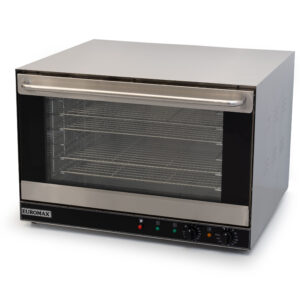
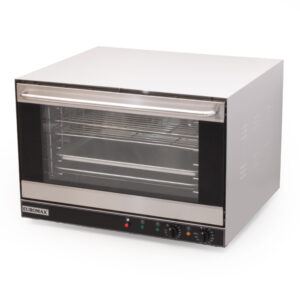
A commercial convection oven distributes heat evenly using fans. This is ideal for finishing and baking on multiple trays at the same time, with consistent results. For many kitchens, a convection oven is the most practical choice when you primarily prepare oven-baked snacks, rolls, pastries, and oven-baked dishes.
What is a convection oven good for?
- Baking rolls and pastries
- Oven-baked snacks and small dishes
- Gratins, sheet metal dishes, and oven-baked dishes
What should you look for in a convection oven?
- Number of decks/levels: tailored to peak traffic
- Temperature Range & Stability: Key Factors in Baking Results
- Steam function (optional): for bread and a better crust
- Power supply: compact models are often 230V, while heavier ones are 400V
- Cleaning: removable guides, smooth interior
Pizza ovens
A professional pizza oven is designed for high temperatures and high throughput. This produces the classic pizza results: a crispy crust, well-risen dough, and short baking times. Depending on your concept, you can choose between a traditional deck/stone oven or a conveyor-belt pizza oven for maximum speed and consistency.
Choosing a Pizza Oven
- Deck/brick oven: traditional results, often with multiple decks
- Conveyor/continuous-flow oven: high output, constant speed, and workflow
Tips for Buying Pizza Ovens
- Maximum temperature & recovery capacity: important during peak hours
- Capacity: number of pizzas at a time and diameter
- Energy source: electric or gas (depending on location/amenities)
- Insulation: Less heat loss, a more comfortable kitchen
Smokers
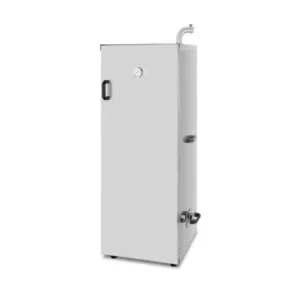
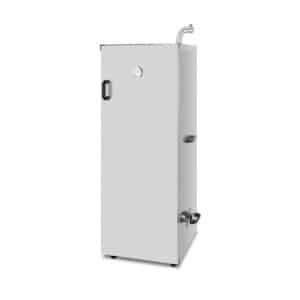
With a smoker designed for the foodservice industry, you can develop unique flavors and create products with your own signature style. Think of smoked salmon, chicken, vegetables, or meat. Smoking can also contribute to an efficient prep process: you work in batches and can portion ingredients precisely. Be sure to pay attention to your setup and ventilation so you can work safely and efficiently.
What should you look for in a smoker?
- Hot/cold smoking: choose what works best for your product line
- Capacity & layout: shelves/hanging systems depending on the product
- Temperature Control: Crucial for Food Safety and Consistency
- Ventilation/Exhaust: Check the kitchen layout and regulations
- Smoking system: wood chips/smoke generator (depending on the model)
Practical Buying Tips (for All Ovens)
These tips will help you quickly choose the right oven and avoid any surprises during installation or use.
1) Capacity & Workflow
- How many servings/pizzas/trays per hour do you need?
- Do you work in batches (prep) or mainly during service?
2) Connection and Installation
- 230V vs. 400V: Check Your Electrical Panel and Available Circuit Breakers
- Water/Drainage: Especially relevant for combi steamers
- Dimensions: Take doorways and installation into account
3) Cleaning & Maintenance
- Stainless steel and rounded corners save time
- Automatic cleaning is a major advantage during daily, intensive use
4) Energy Consumption
- Consider insulation, warm-up time, and usage patterns (frequent on/off vs. left on for long periods)
Frequently Asked Questions About Commercial Ovens (FAQ)
Which oven is the most versatile for the foodservice industry?
A combi-steamer is generally the most versatile because it allows you to cook with both hot air and steam and is also great for regenerating food.
What is the difference between a convection oven and a combi-steamer?
A convection oven works by circulating hot air. A combi-steamer can also add steam, giving you more control over juiciness and shrinkage.
Do I always need three-phase power (400V)?
Not always. Some compact ovens operate on 230V, but heavier convection ovens, combi steamers, and pizza ovens often require 400V. Check the specifications for each model.
What should I look for in a pizza oven for delivery?
Consider throughput, recovery capacity (maintaining temperature when handling a high volume of orders), and capacity. A conveyor/continuous-flow oven often provides the most consistent performance at high volumes.
Are smoke ovens suitable for any kitchen?
Not every setup is ideal. Consider ventilation/exhaust, available space, and the type of smoking (hot/cold) you want to use.