stainless steel sink tables
A stainless steel sink (also known as a stainless steel washbasin or stainless steel sink unit) is the foundation of a fast, hygienic, and efficient dishwashing line in the foodservice industry. Whether you run a restaurant kitchen, a lunchroom, a cafeteria, a butcher shop, a bakery, or a catering kitchen: with a high-quality stainless steel sink, you can keep your workflow running smoothly, prevent bottlenecks, and operate in compliance with hygiene standards.
Our product line features a wide selection of stainless steel sinks in various widths, configurations, and styles, including handy subcategories for specific applications.
Categories











Trending products
Why Choose a Stainless Steel Sink?
1) Hygienic and easy to clean
Stainless steel is smooth, strong, and highly resistant to rigorous cleaning. This makes it ideal for environments where water, food scraps, and cleaning products are used on a daily basis. With the right routine (see maintenance tips below), your sink will stay clean and professional-looking for a long time.
2) Strong, stable, and built for heavy-duty use
In a busy kitchen, a sink has to endure a lot: heavy pots, crates, GN containers, scrubbing, and hot water. A sturdy stainless steel sink is designed to handle that workload and remains stable during peak hours.
3) Efficient routing in your washing area
A dishwashing process works best when followed in a logical order: pre-rinse → wash → rinse/dry. With the right sink layout (for example, 1 or 2 sinks, a draining area on the left or right, and cabinet space underneath), you can make that workflow much easier for your team.
What should you look for when choosing the right stainless steel sink?
Number of sinks and layout
- Single-bowl sink: compact, ideal for smaller kitchens or as an additional sink.
- Double sink: allows you to work faster (e.g., pre-rinsing and post-rinsing) and is convenient for larger volumes.
Also consider whether you need a dish-draining area, and which side (left/right) would fit best in your space.
Dimensions and Ergonomics
Measure beforehand:
- available width and depth
- walking routes (enough space to work and walk through)
- working height (comfort = faster and less physical strain)
Storage and cabinet under the sink
You can make the most of the space under the sink: cleaning supplies, baskets, crates, or pantry items. That’s where the subcategories come in handy.
Subcategories at Horeca Online Store (with usage tips)
1) Stainless steel sinks that are dishwasher-safe
This design is ideal if you want to integrate a sink into or right next to your dishwasher setup. Think of a smart sink setup where you first rinse dirty dishes and then send them directly into the dishwasher. This saves steps, prevents water from spilling onto the floor, and increases processing speed.
2) Stainless steel sinks with hinged doors
Hinged doors are handy if you want quick access to items stored under the sink (such as a cleaning bucket, soap, spare baskets, or trash). They also create a calmer, neater look than open storage, which is nice in open-concept kitchens or high-traffic areas.
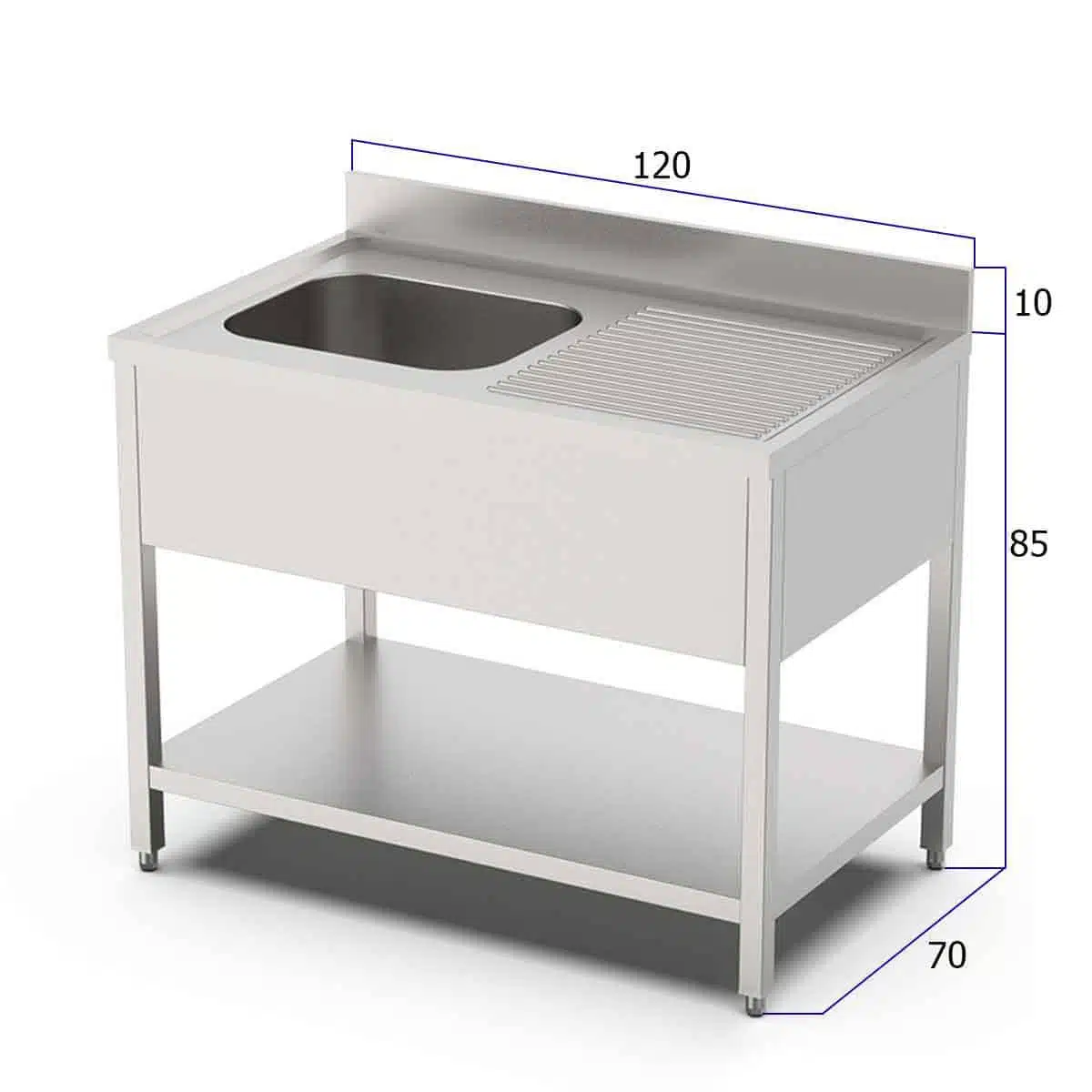
3) Stainless steel sinks with base cabinets
A shelf unit is a practical and often cost-effective way to create extra storage space without using a closed cabinet. It’s ideal if you:
- want to let wet items drain
- want to quickly grab something without opening any doors
- you want to keep the space under the table clean
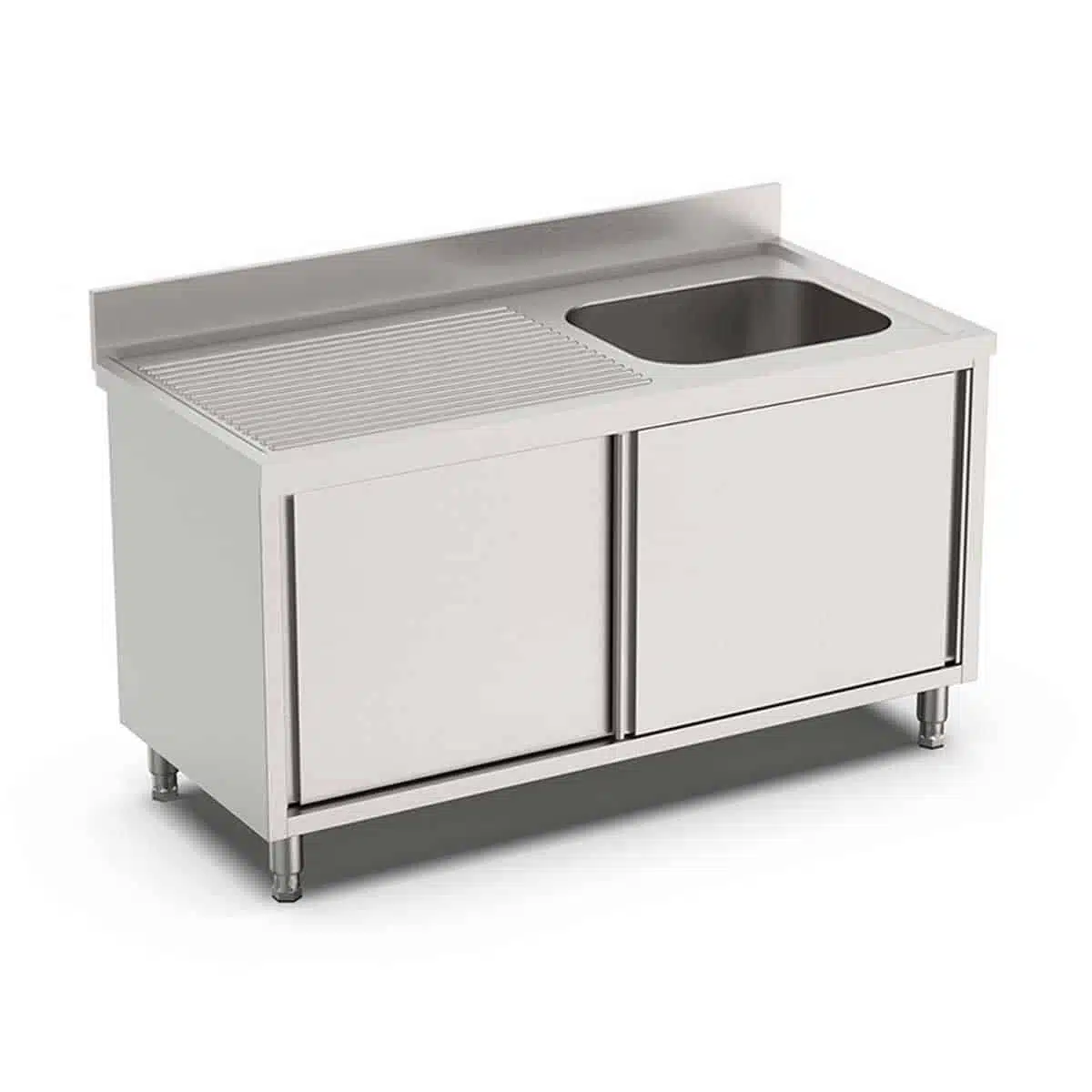
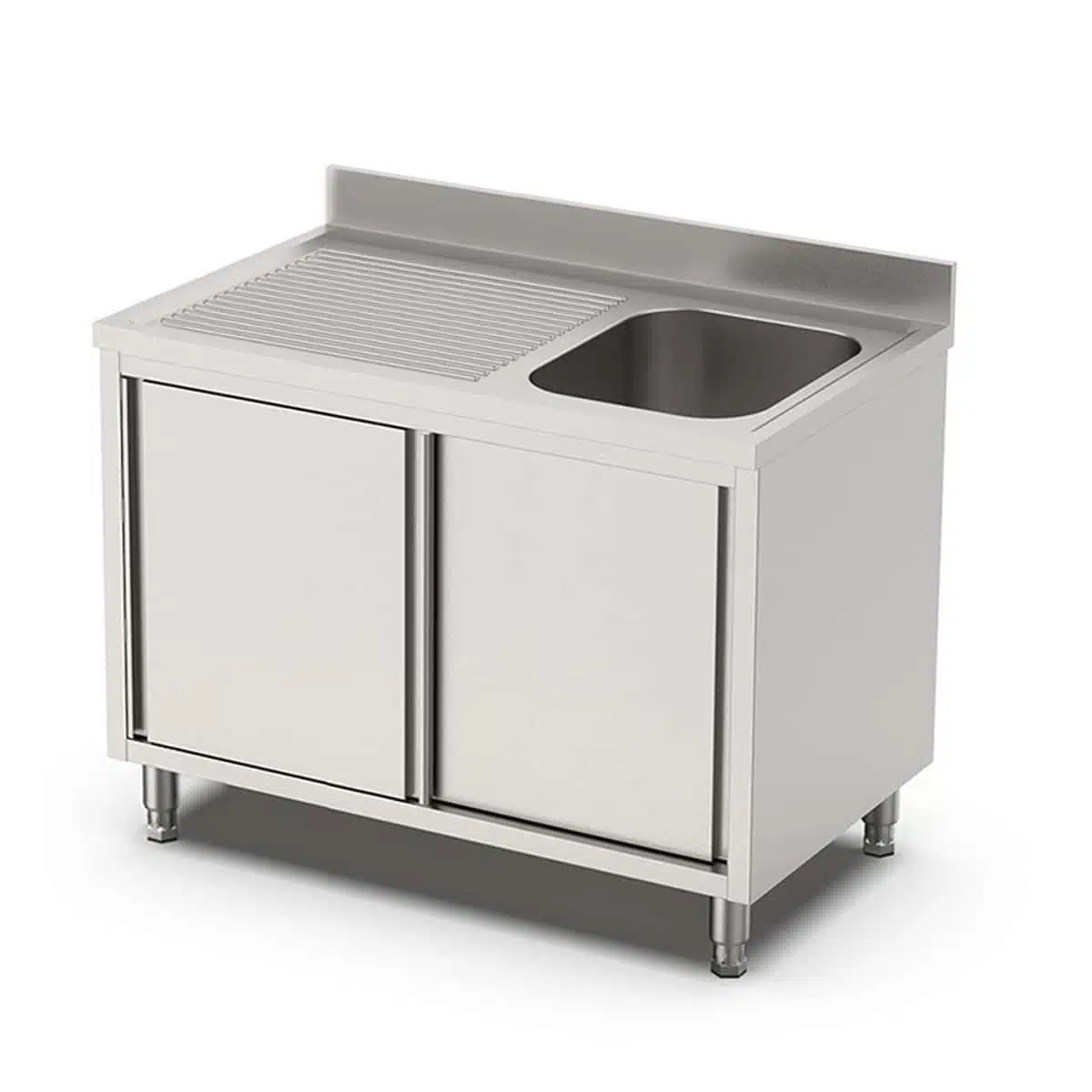
4) Stainless steel sinks with sliding doors
Sliding doors are perfect if you have limited space in front of the sink (narrow kitchen, hallway, compact layout). You don't need to keep a turning radius clear, as you do with hinged or swing doors. Plus, they keep dust and splashes out of your storage area.
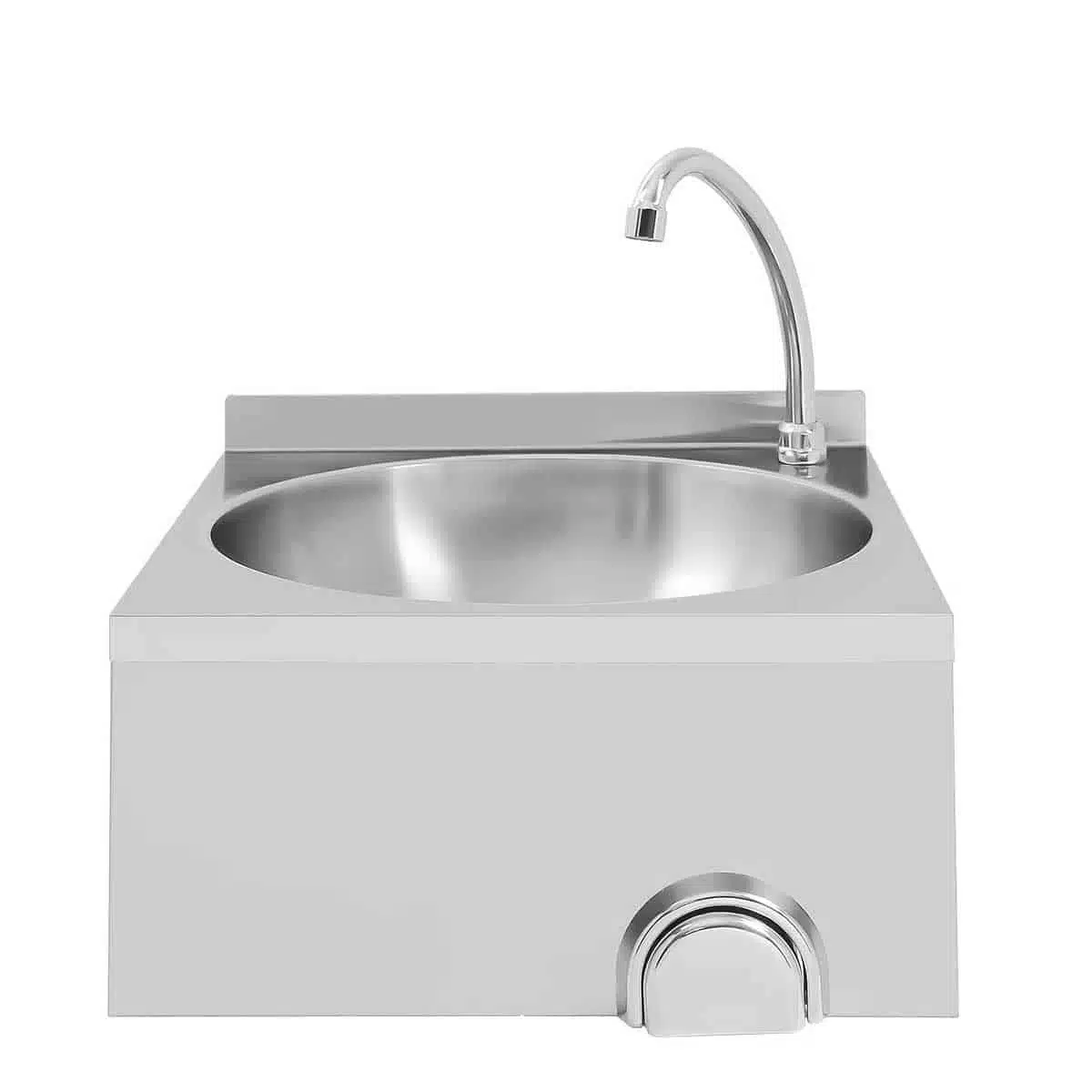
5) Stainless steel sinks and washbasins
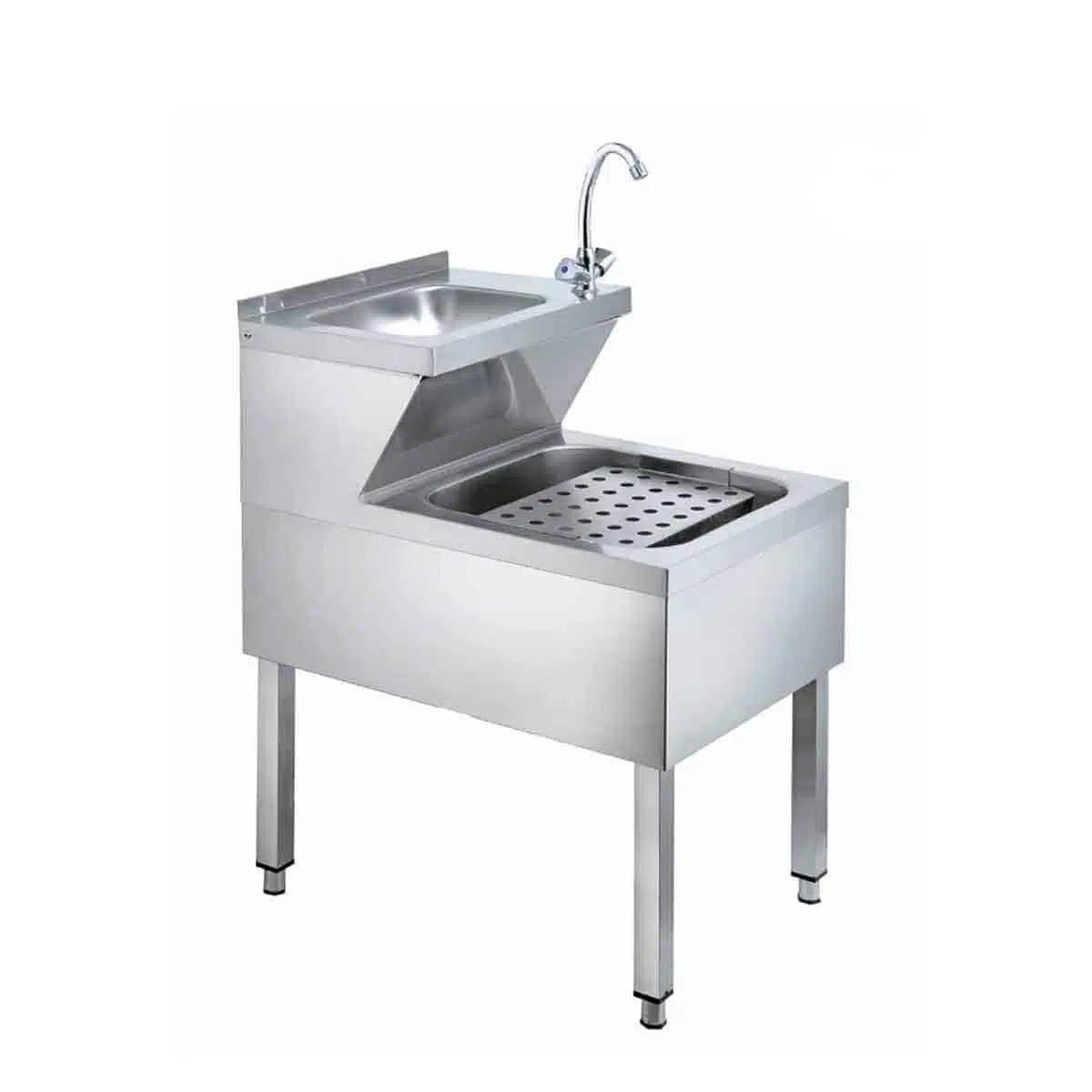
Sometimes you don't need a complete sink unit, but rather a freestanding stainless steel sink ( for example, for hand washing, rinsing vegetables, or as an extra sink in the kitchen or bar). This subcategory is useful if you want to put together a custom sink solution.
Helpful Tips for Using and Maintaining Stainless Steel Tables and Sinks
Daily Cleaning (A Practical Step-by-Step Guide)
- Rinse away food scraps with warm water.
- Clean with a mild detergent and a soft sponge or cloth.
- Rinse and, preferably, dry with a soft cloth to reduce limescale stains.
- Work in the direction of the “brush grain” (the grain) of the stainless steel for a better result.
Prevent damage and dull spots
- It's best to avoid using steel wool or abrasive scouring pads: they can cause scratches.
- Do not allow salt, acids, or harsh chemicals to remain on the surface for longer than necessary.
- When setting down hot pans, do so gently (don't "throw" them) to prevent dents.
Smart layout = faster rinsing
- Clearly separate a pre-rinse zone (dirty) from a clean zone (drain/dry).
- Use bins or crates to sort items (glasses, cutlery, plates).
- Keep frequently used items within easy reach (under the sink or in a cabinet) so you don't have to walk as much.